Thanksgiving 2026 will be one of the busiest travel weeks on record: 81.5 million Americans travelling, LAX expecting nearly 2.6 million passengers, long TSA lines, and a 14- to 16-foot swell and king tides on the California coast. When to fly, when to drive, and how to prepare.
Thanksgiving 2026 is shaping up to be one of the busiest travel weeks in American history, and Southern California is right in the middle of it. Thanksgiving Day falls on Thursday, November 26, 2026, and AAA's travel period runs Tuesday, November 24, through Monday, November 30. About 81.5 million Americans are expected to travel at least 50 miles, essentially flat against last year's 81.6 million and close to a record. In California, about 11 million people are expected to travel, up 0.6 percent, and in Southern California about 6.8 million — a new regional record. The message is simple: leave early, expect crowds, and have a backup plan, because the airports, freeways and coastline will all be under pressure at once.
How busy it will be
AAA, which released its forecast on November 16, expects 72.9 million Americans to travel by car, 5.96 million to fly domestically and 2.6 million by bus, train or cruise. Flying is pricier: the average domestic round-trip airfare is about $800, up 17 percent, while hotels average $615 per stay, up 5 percent. Airlines for America expects nearly 29 million flyers between November 20 and 30, about 2.7 million a day; American Airlines alone expects more than 8 million customers on nearly 85,000 flights between November 19 and December 1. At LAX, nearly 2.6 million passengers are expected between November 19 and 30, up nearly 5 percent. The busiest day is Sunday, November 29, with more than 242,000 passengers; Thanksgiving Day itself should see about 146,000.
Flying: TSA wait times and the best and worst days
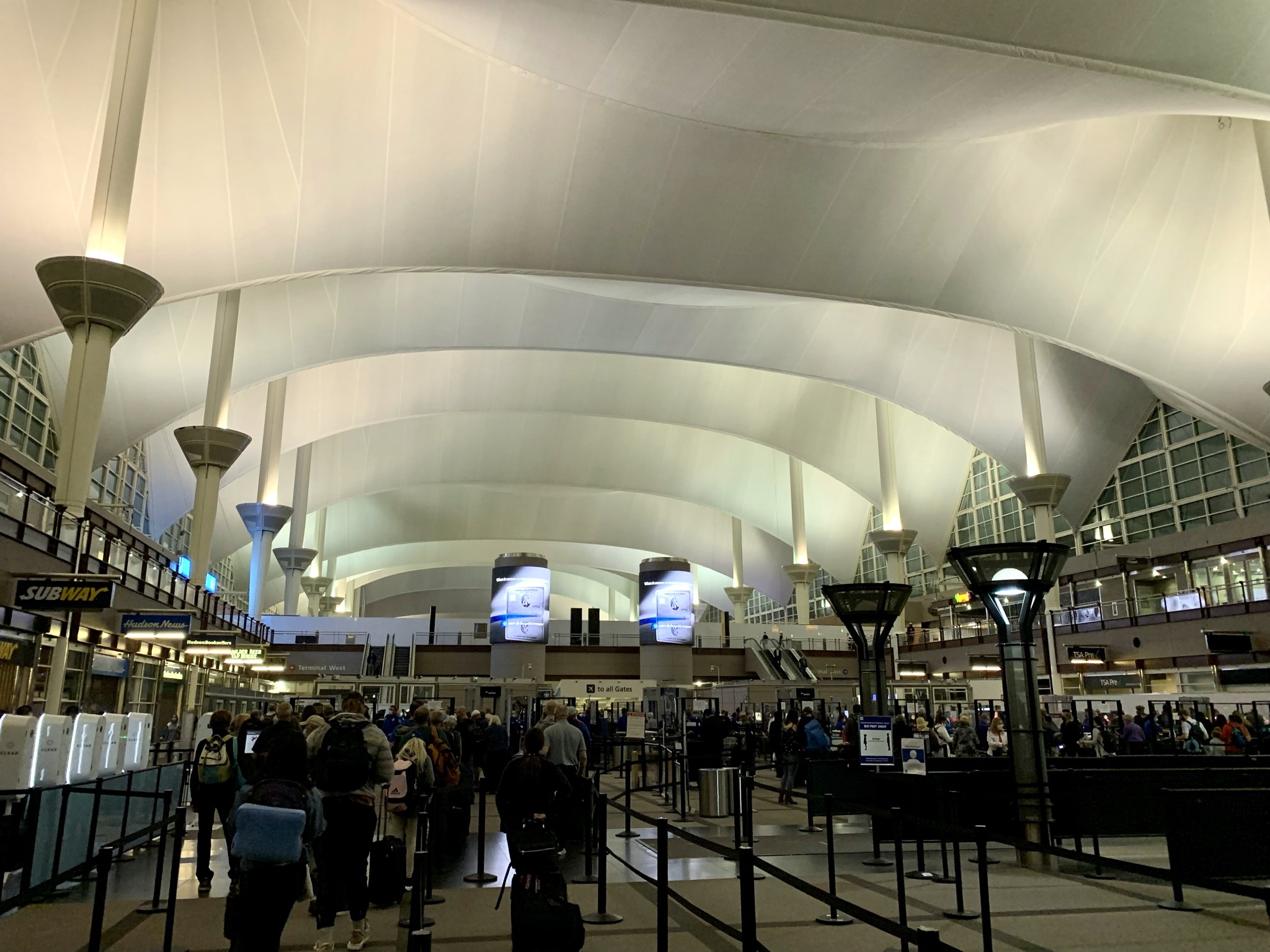
Passengers queue at airport security at Denver International Airport.
Photo: APK, via Wikimedia Commons (CC BY-SA 4.0)
Sunday, November 29, could be the busiest screening day in TSA history, passing the record of 3.13 million screened on November 30, 2025. Airlines for America expects about 3.3 million flyers that Sunday and 3 million on Monday, November 30 — the two worst return days. The worst TSA times are 5 to 8 a.m. and 2 to 5 p.m. At LAX, standard lines run 50 to 90 minutes on the busiest days, versus 7 to 12 minutes for PreCheck. Arrive three hours early for a domestic flight on peak days, three and a half at the busiest hubs. Best days: Thursday, November 26 (quietest), Tuesday early, and Friday or Saturday for the return. Worst: Sunday, Monday, and Wednesday afternoon, November 25, when TSA screened about 2.75 million last year.
Delays and cancellations and your refund rights
Travellers are nervous, and with reason. On Friday, November 13, the FAA stopped departures nationwide for more than four hours and thousands of flights were cancelled, and many worry it could recur. The system has little slack: delay rates spike 40 to 60 percent above normal on peak days, and one weather event at a hub can cascade across the network. Book the first flight of the day, avoid tight connections, and keep your airline's app open. Most important is a right many do not know they have: if a flight is cancelled and you do not accept the alternative, you are owed a full cash refund, no matter the cause. You do not have to take a voucher. Ask for the refund, get it in writing, and keep every receipt.
Driving: California roads and when to leave
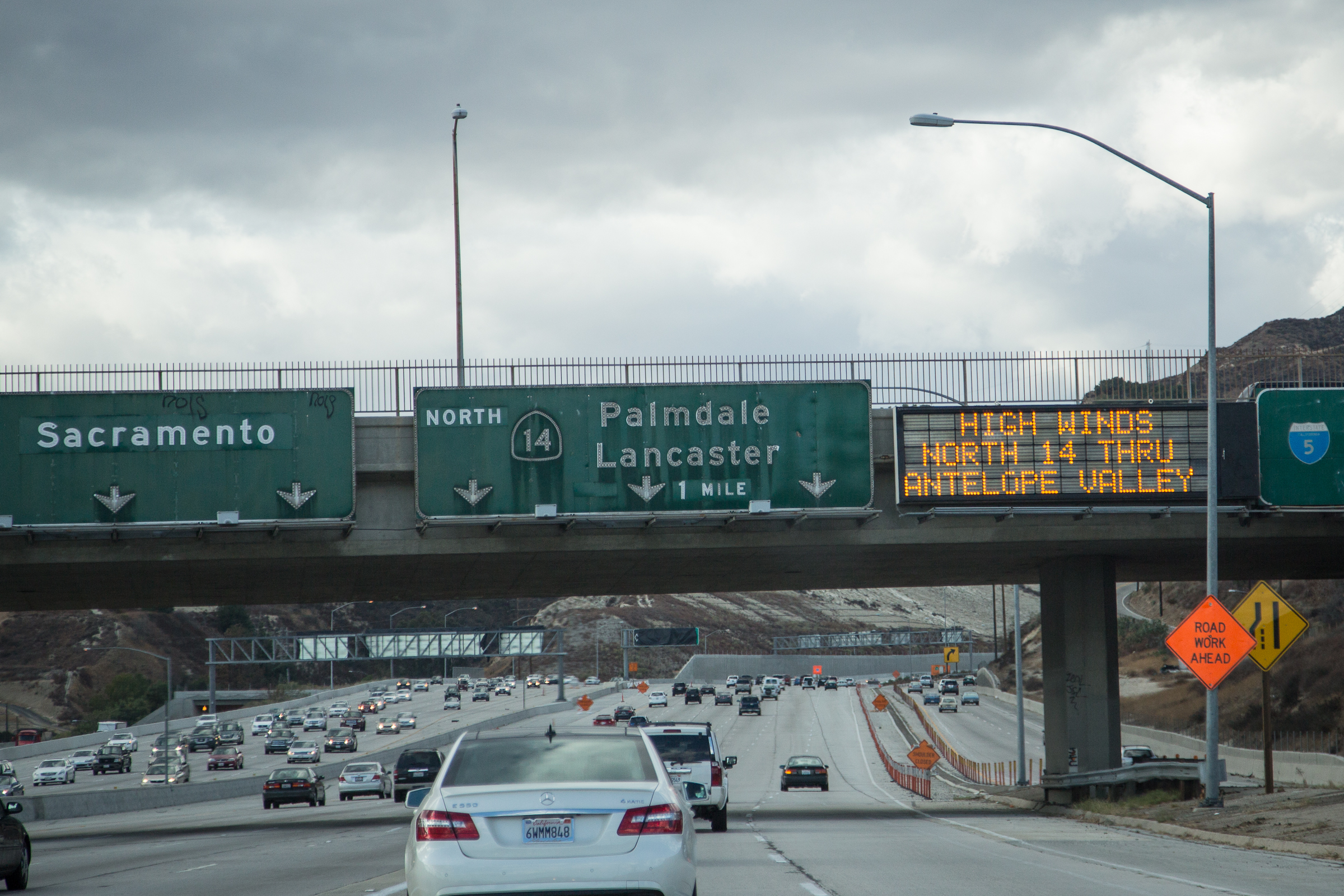
Traffic at the I-210 / I-5 interchange in Los Angeles.
Photo: Tony Webster, via Wikimedia Commons (CC BY 2.0)
Most Californians will drive. INRIX and AAA expect congestion in big metros including Los Angeles to be more than double normal at peak times, and I-5 approaching Los Angeles is a particular pressure point. The worst traffic is Tuesday and Wednesday afternoons outbound, and Sunday and Monday heading home. Leave in the morning: Tuesday before 1 p.m., Wednesday before noon, Sunday before 11 a.m. That window is the difference between a steady drive and hours of stop-and-start. Before setting off, check fuel or charge, tyres and washers, charge your phone, and download your route. Pack water, snacks and a charger, and agree on stops in advance.
California weather: the week day by day
The weather is mostly on the traveller's side. Per the National Weather Service in Los Angeles and Oxnard, light rain fell Sunday, November 22, into the night as a weak front passed. Monday into Tuesday is warm and dry, highs in the upper 60s to mid-70s. Light rain is possible Tuesday night into Wednesday, mainly north of Point Conception — San Luis Obispo and Santa Barbara counties could see up to 0.25 inches — while Ventura and Los Angeles counties have less than a 15 percent chance. Thanksgiving Day and Friday are dry and warmer, highs in the 70s to lower 80s, 4 to 8 degrees above normal, with weak offshore winds. Saturday, November 28, brings another weak system with light showers and cooler temperatures. The wettest moments are at the edges, not Thanksgiving Day.
The coast: swell and flooding risk
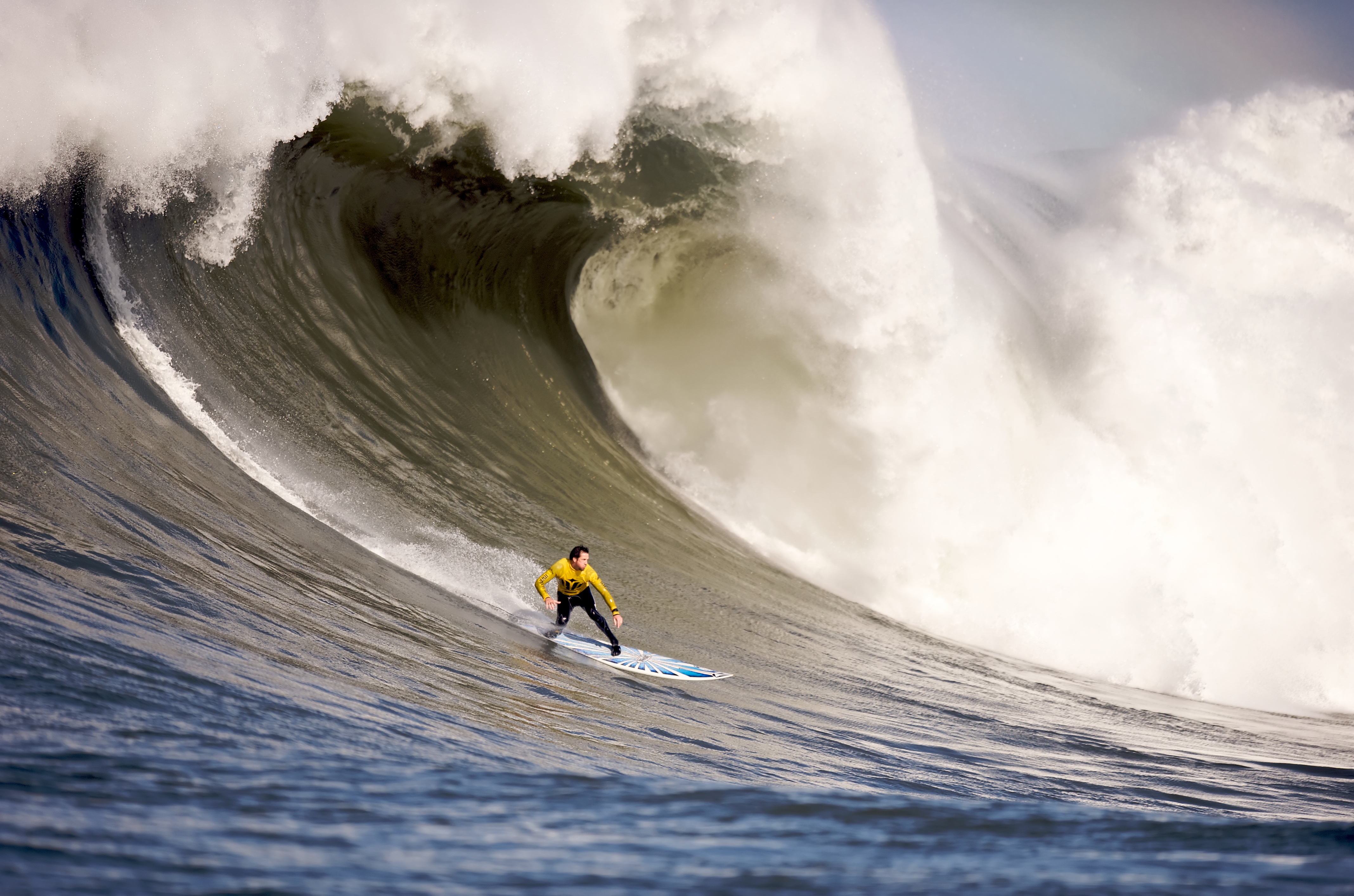
A surfer rides a large wave at Mavericks, Half Moon Bay, California.
Photo: Shalom Jacobovitz, via Wikimedia Commons (CC BY-SA 3.0)
The most serious warning is not about rain. The NWS has flagged significant concern about moderate to major coastal flooding from a large, long-period westerly swell of around 14 to 16 feet arriving mid-week, combined with king tides — perigean spring tides — and thermal expansion. That can flood low-lying coastal roads, car parks and beach access, and send powerful waves over seawalls. Take it seriously: do not drive through flooded coastal roads, do not park in low-lying beach car parks during the peak swell and high tide, and never turn your back on the ocean or stand on rocks where a wave can reach you. Check the forecast and local closures before you go, and ask about flooding and parking before the swell arrives, not during it.
Preparedness tips: a checklist for travellers
Check in online, download your boarding pass, and screenshot it in case Wi-Fi fails. Pack a change of clothes, medication, chargers and snacks in your carry-on. Arrive early — three hours for a domestic flight on peak days, three and a half at the busiest hubs — and remember the worst TSA windows, 5 to 8 a.m. and 2 to 5 p.m. Keep your airline's phone number and booking reference in your phone. If driving, leave in the morning — Tuesday before 1 p.m., Wednesday before noon, Sunday before 11 a.m. — and keep your tank or battery topped up. Check the weather and coast the morning you travel. Know your refund rights: a cancelled flight you do not reaccept means a full cash refund. Build in a buffer so one delay does not ruin the holiday.
Why this matters for Hollywood
For Hollywood, Thanksgiving is a working week with the whole industry on the move. LAX is the gateway for crews, executives, actors and their families travelling home and back for the next production block, and a crowded airport or cancelled flight can ripple through a call sheet as surely as a family dinner. Southern California's record 6.8 million travellers include the people who make the shows and films the country watches over the holiday, and the holiday box office depends on those audiences reaching a cinema — or a sofa — without a ruined journey. A dry, warm Thanksgiving in the 70s and lower 80s is ideal for a holiday release, while a 14- to 16-foot swell and coastal flooding can close the beaches and roads that draw visitors. Plan like a production manager: leave early, keep a backup, and give yourself time.