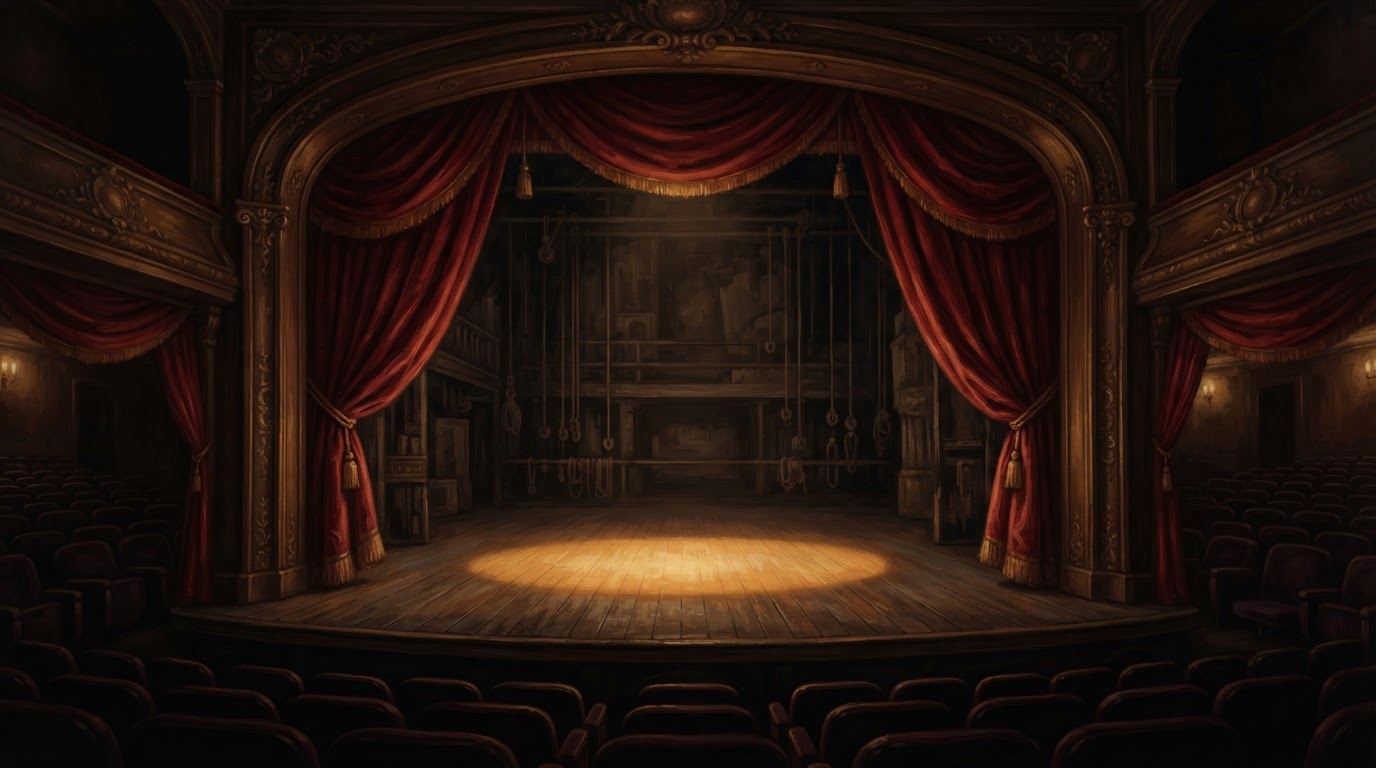
AI-generated illustration of an empty theatre stage with a warm spotlight and red curtain.
Steven Hack, an original Broadway 'Cats' cast member whose TV credits ran from 'Seinfeld' to 'Desperate Housewives' and 'American Horror Story', has died at 68 after a sudden cardiac event at his Los Angeles home.
Steven Hack, the prolific stage and screen actor whose career ran from the original Broadway cast of Cats to Seinfeld, Desperate Housewives and American Horror Story, has died at 68. He died on Thursday, November 19, at his home in Los Angeles, after what the theatre company he co-founded described as a sudden and unexpected cardiac event. A death certificate obtained by PEOPLE lists the official cause of death as atherosclerotic cardiovascular disease.
The news was announced on Saturday, November 21, by Los Angeles' Interact Theatre Company, the company Hack helped to found in 1989. In a social media post, the company wrote that he had "recently passed away at home following a sudden and unexpected cardiac event." The announcement was picked up across the entertainment press on Tuesday, November 24, with PEOPLE, Deadline, the Daily Beast, the New York Post and the Daily Mail all carrying obituaries — a measure of how widely, and how quietly, Hack had worked across American stage and screen for more than four decades.
Hack was born on April 20, 1958, in St. Louis, Missouri. He studied acting at the California Institute of the Arts and the American Academy of Dramatic Arts, and made his professional debut as a dancer in the 1978 film Grease — the John Travolta and Olivia Newton-John musical that became one of the highest-grossing films of its era. As Deadline noted in its obituary, Hack can be seen doing backflips during the finale number, "We Go Together!" It was a fitting start for a performer whose first love was the stage and whose body never stopped being an instrument: he was a dancer before he was an actor, and the physicality stayed with him through a career of stage work.
From Grease to Cats: a life on the stage
Hack's Broadway debut came in the ill-fated musical Coolest Cat in Town, but the credit that defined his stage career arrived in 1982, when he joined the original Broadway cast of Andrew Lloyd Webber's Cats. He served as a swing and standby in the production, covering the role of Coricopat, and stayed with the show through its long run at the Winter Garden Theatre. A 1987 photograph of the cast, published by PEOPLE alongside its obituary, shows Hack with fellow Cats performers Marlene Danielle, Susan Powers, Bonnie Simmons, Anna McNeely and Joel Robertson — a snapshot of a company that had become, by then, one of the most famous ensembles on Broadway.
Cats ran for 18 years on Broadway and became, for a generation of theatregoers, the definition of the modern musical. For the actors inside it, the show was something else: a job of extraordinary physical demand, performed eight times a week, in which swings and standbys like Hack were the production's insurance policy — performers who knew every track in the show and could step into any of them at a moment's notice. It was unglamorous, exacting work, and Hack did it for years. The discipline of that world — the rehearsal room, the company, the nightly performance — shaped everything that came after.
When he moved to Los Angeles, Hack carried the theatre with him. In 1989 he co-founded the Interact Theatre Company, the Los Angeles company that announced his death this week. The company became his artistic home in the city, and he remained a founding member for the rest of his life. For an actor whose screen career was built on guest spots and supporting roles, the company was where he could do the work on his own terms: new plays, ensemble pieces, and the kind of intimate theatre that Los Angeles, for all its film and television, has always sustained in its small rooms.
The character actor Hollywood kept calling
If the stage was Hack's first home, television was where most audiences met him. He was a member of the Television Academy for more than 20 years, and his list of credits reads like a map of American television across three decades. He appeared in Seinfeld — the role most obituaries lead with, in which he played a judge — and in Desperate Housewives, American Horror Story, Ratched, Marvel's Agent Carter, The Newsroom, Scrubs, The West Wing, Everybody Loves Raymond and Mad About You. He worked in daytime, too, with roles in Days of Our Lives and General Hospital, and in procedurals and dramas including The Mentalist and Bones. One of his most recent credits was Poppa's House, the CBS comedy starring Damon Wayans, in which he appeared alongside Wayans and Tommy Davidson.
It is the classic career of the working character actor: rarely the star, almost always the person who makes the scene work. Hack played judges, doctors, officials and authority figures — the men in suits who deliver the news, run the hearing, or stand behind the desk while the leads have their moment. He did it with a specificity that casting directors kept coming back to, across genres and decades, from sitcoms to soaps to prestige drama to Marvel. The breadth of the list is the point. A career like Hack's is not built on one breakthrough but on hundreds of small decisions by hundreds of different people to hire the same reliable actor again.
His film work followed the same pattern. He appeared in Steven Spielberg's Minority Report in 2002, in the Coen brothers' Intolerable Cruelty in 2003, and in Marvel's Thor: The Dark World in 2013. None of the roles made him famous. All of them put him on sets with the biggest directors and the biggest franchises in the business, doing the work that character actors do: arriving prepared, hitting the mark, and making the scene believable.
What happens next
There has been no announcement of funeral or memorial arrangements. The Interact Theatre Company, which broke the news, has not said more about services, and Hack's family has not made a public statement. What is known is that the tributes began within hours of the news spreading on Tuesday: colleagues, fans and theatre companies posting memories of a performer remembered, in the words of those who worked with him, for his creativity, his warmth and his generous spirit.
The obituaries themselves tell a story about how the industry remembers its own. PEOPLE led with Cats and Grease. Deadline led with American Horror Story, Ratched and Agent Carter. Page Six led with Seinfeld. Each outlet reached for a different corner of the same career, and each of them was right: Hack belonged to all of those worlds at once, and to none of them exclusively. That is the fate, and the achievement, of the character actor — to be recognisable everywhere and famous nowhere.
Why this matters for Hollywood
Hollywood runs on stars, but it is built on actors like Steven Hack. The industry's economics are organised around a small number of famous names, yet its daily work — the thousands of hours of television and film produced every year in Los Angeles — depends on a much larger company of working actors who show up, know their lines, and make the scene real. Hack worked steadily for more than forty years, across Broadway, film and television, in a business that discards most people within a decade. He did it without a breakout role, without a franchise of his own, and without ever becoming a household name.
His death is also a reminder of how much of the industry's history lives in people rather than in archives. Hack was there for the original Cats. He was there for Grease. He was there for the Seinfeld era and the Marvel era and the streaming era, moving between them the way working actors always have — following the work, not the fashion. When a performer like that dies, a piece of the industry's living memory goes with them: the rehearsal-room stories, the knowledge of how a show was actually made, the craft that never appears on a poster.
For Los Angeles, where Hack lived and worked for decades and where he built his theatre company, the loss is a local one as well as a professional one. Interact Theatre Company was his attempt to make a permanent home for the work he believed in, in a city that often treats theatre as a stepping stone to something else. It survives him. The company that announced his death is, in the end, the most fitting memorial he could have left: a room, a company, and a stage where the work goes on.