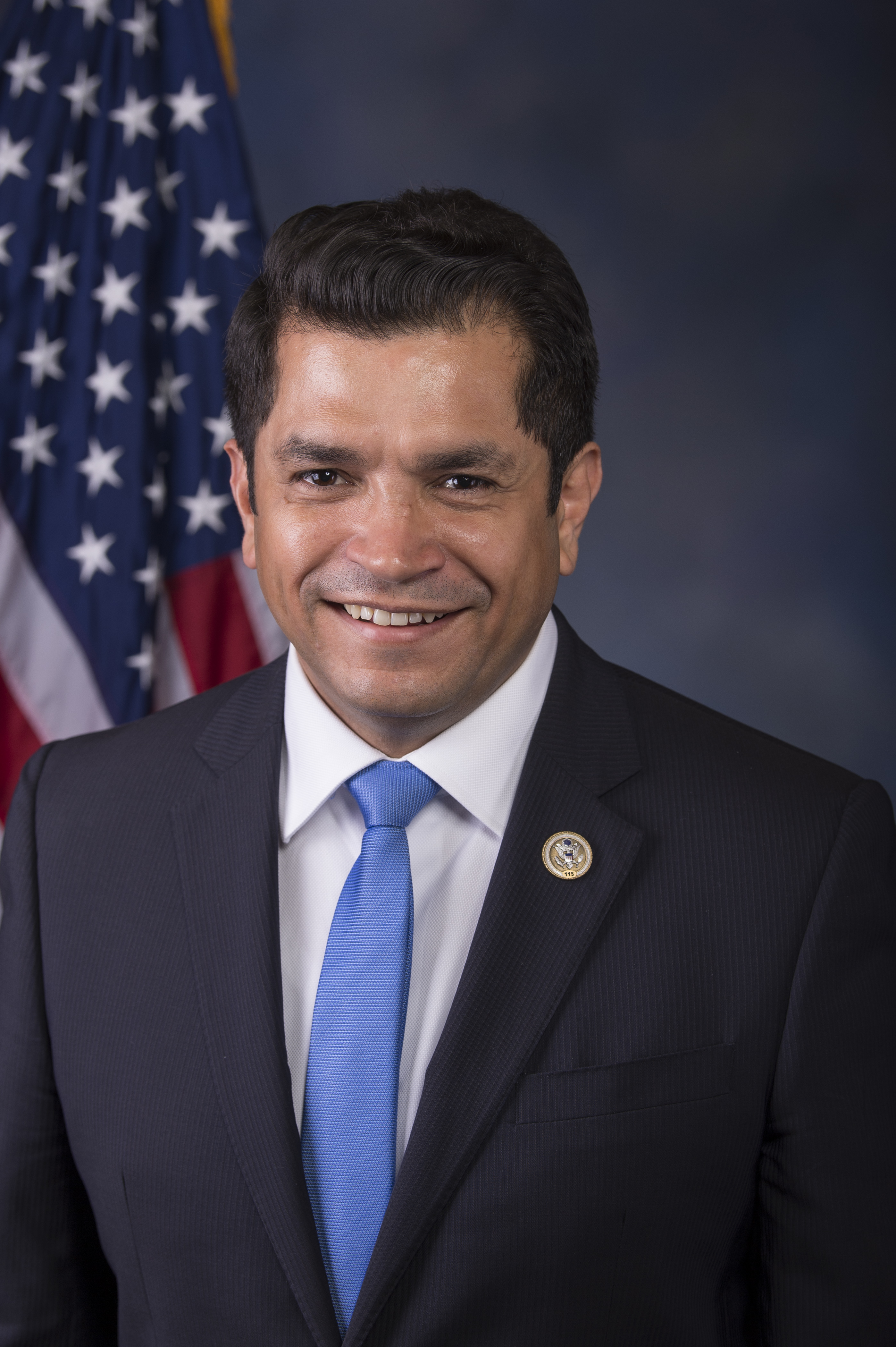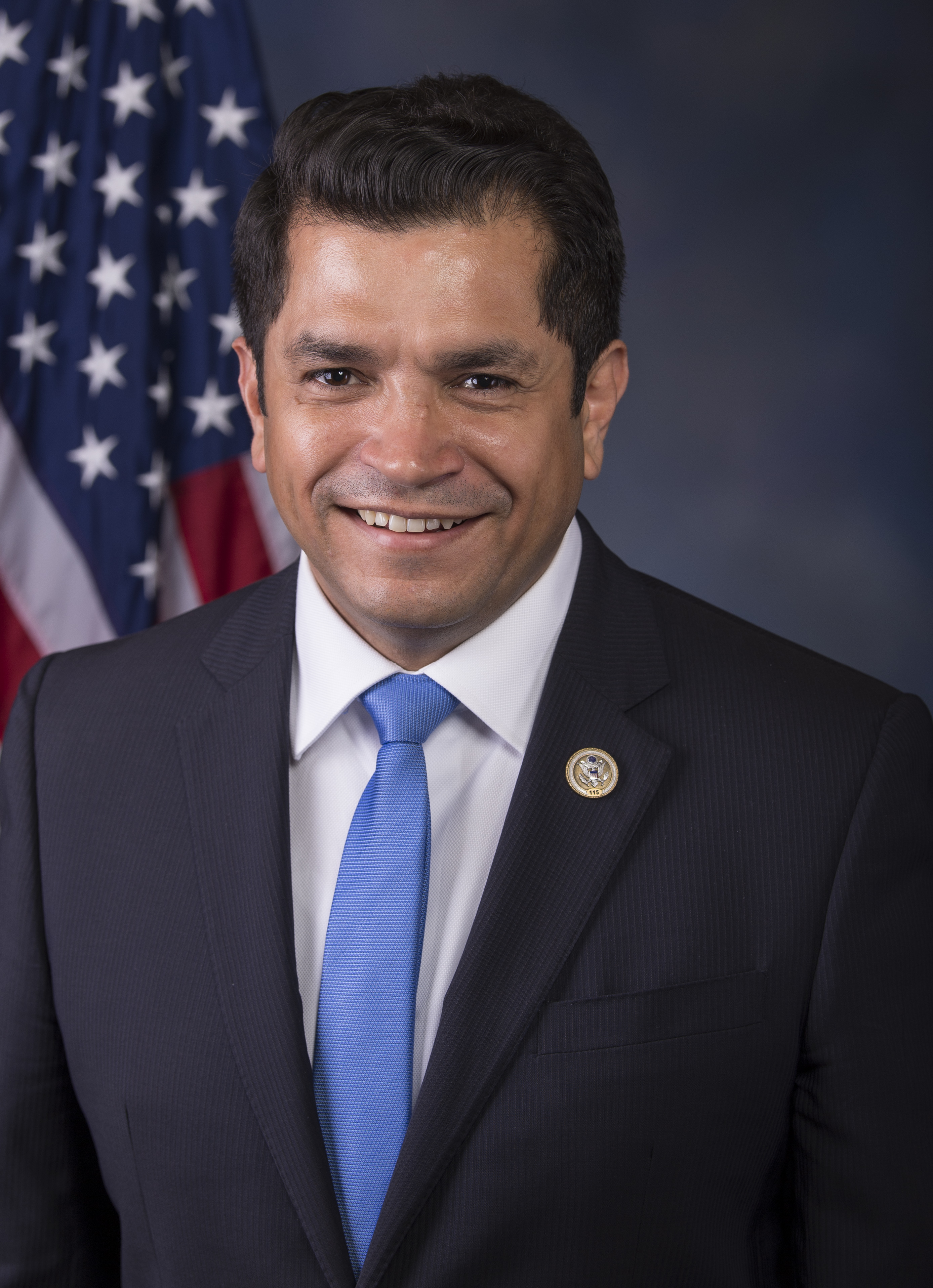
Rep. Jimmy Gomez, official House portrait.
Los Angeles Rep. Jimmy Gomez will resign Dec. 1 after the House Ethics Committee found "substantial evidence" he engaged in sexual misconduct toward a House staffer. He had already lost re-election.
A Los Angeles congressman is resigning from the House of Representatives after a bipartisan ethics investigation found "substantial evidence" that he engaged in sexual misconduct toward a House staffer — a report that ended the career of a five-term representative who had already lost his bid for re-election earlier this month. Representative Jimmy Gomez, a Democrat who has represented parts of Los Angeles since 2017, announced on Monday that he will resign effective December 1, within an hour of the House Ethics Committee making its findings public.
The report, released on Monday, November 23, concluded that Gomez violated House rules by "making unwelcome sexual advances and engaging in unwelcome sexual conduct towards a House staffer and disregarding the power imbalance inherent in his relationship with House staffers." The committee found that Gomez "made sexual contact" with a congressional aide without her consent, and that his conduct "caused this House staffer significant and ongoing distress and contributed to her decision to leave House employment altogether." The committee also said Gomez's behavior toward the aide could implicate Washington, D.C., laws related to criminal sexual assault, including misdemeanor sexual abuse.
Gomez, 51, has served in Congress since a 2017 special election, representing California's 34th congressional district, which covers parts of Los Angeles. He is married, has been in office for more than nine years, and founded the Dads Caucus, a group of fathers in Congress. He lost his re-election bid earlier this month to fellow Democrat Angela Gonzales-Torres, a democratic socialist, by nearly 25 points — a defeat that meant he was already set to leave Congress in January. The ethics report, and his resignation, bring that departure forward by a month.
What the committee found
The House Ethics Committee is a bipartisan panel of ten members, five Democrats and five Republicans, and its report was the culmination of a months-long investigation. The committee opened its inquiry in August, after a press report that Gomez had been seen kissing a House staffer at a party. The investigation that followed examined his conduct toward two women: a staffer from another congressional office, and a second aide with whom Gomez admitted having an extramarital affair.
The committee found the first staffer credible, and determined that Gomez violated House rules by making an unwelcome sexual advance toward her. It found that he had engaged in sexual contact without her consent, and that the conduct could constitute criminal misdemeanor sexual abuse under District of Columbia law. The report does not recommend any particular sanction — a point that drew attention, since the committee's findings were severe enough to end a career but stopped short of prescribing a punishment.
The committee also used the report to make a broader point. It said Gomez's conduct "reflects a broader environment of sexual misconduct and toxic working conditions in some Capitol Hill offices which the Committee is determined to address." It is an unusually blunt statement from a body that typically confines itself to the facts of a single case, and it suggests the committee sees the Gomez case as a symptom of a wider problem rather than an isolated failing.
The report's findings were released as part of a tranche of investigative findings made public on Monday, and Gomez is the third member of Congress to resign this year in the face of sexual misconduct allegations — a statistic that says as much about the year as it does about any single case.
Gomez's response
Gomez announced his resignation within an hour of the report becoming public, in a statement that combined defiance with concession. He said he cooperated with the investigation at every stage, but that he has "strong disagreements with the Committee's report and its conclusions," and that the report "does not include key portions of my testimony that are essential to a full and fair understanding of what occurred."
At the same time, he said he recognized the seriousness of the report and took "full responsibility for the personal mistakes I committed outside of my marriage." "With this in mind, I see no other alternative than to resign, effective December 1, to allow for my staff to close out important constituent casework and needs," he wrote.
The woman's attorneys, in a statement to CNN, said the report "confirms that Representative Gomez sexually harassed and assaulted our client while she was a staffer on Capitol Hill." That is the other side's account, stated plainly, and it is the account the committee's findings support.
The election that already ended his career
The ethics report did not, strictly speaking, end Gomez's congressional career. The voters of California's 34th district had already done that. Earlier this month, Gomez lost his re-election bid to Angela Gonzales-Torres, a member of the Democratic Socialists of America, by a margin of roughly 62 percent to 38 percent — a landslide defeat for a five-term incumbent in a district that has been reliably Democratic for decades.
The scale of the defeat is part of the story. Gomez was not beaten by a Republican in a swing district; he was beaten by a fellow Democrat, in a primary-style contest under California's top-two system, by a candidate running to his left. The ethics investigation, which had been public since August, was part of the backdrop to that campaign. His successor, Representative-elect Gonzales-Torres, is due to take the seat in January, and the month between Gomez's resignation and her swearing-in will leave the district without representation in the House.
The pattern, and the institution
Gomez is the third member of Congress to resign this year after sexual misconduct allegations, and the ethics committee's decision to use his case to talk about a "broader environment of sexual misconduct and toxic working conditions" in Capitol Hill offices is the most consequential sentence in the report. It is an admission, from the institution charged with policing itself, that the problem is not confined to one man.
Congress has spent the last decade being forced, repeatedly, to confront the way power works in its own offices. The dynamic the committee described in Gomez's case — a member of Congress, a young staffer, a power imbalance that the member "disregarded" — is the dynamic that has produced scandal after scandal, and the committee's language suggests it knows the pattern by now. The question is whether a report that ends one career, without recommending a sanction, and with a paragraph about the broader environment, amounts to accountability or to a gesture.
For the House, the practical consequences are limited. Gomez was leaving anyway, the committee did not recommend a sanction, and no criminal charges have been reported. The report's power is reputational: a public, bipartisan finding that a sitting member of Congress engaged in sexual misconduct toward a staffer. That finding will follow Gomez out of office, and it will be cited the next time a similar case arises.
What happens next
Gomez's resignation takes effect on December 1. His staff will remain to close out constituent casework, and his successor, Angela Gonzales-Torres, will take the seat in January when the new Congress is sworn in. There is no indication of a special election, since the vacancy will last only a month and the seat's next occupant has already been chosen by the voters.
The ethics committee's work, meanwhile, continues. The tranche of findings released on Monday included other cases, and the committee's statement about the broader environment of misconduct in Capitol Hill offices suggests further reports may follow. Whether the committee's language translates into reforms remains to be seen.
Why this matters for Hollywood
Los Angeles is a company town, and its representatives in Congress are part of the industry's infrastructure — the people who vote on the copyright laws, the tax incentives, the labor rules and the trade policies that shape how films and television get made. When the congressman who represents parts of Los Angeles resigns over a sexual misconduct finding, it is not a distant Washington story. It is a story about the person who was supposed to represent this city in the room where those decisions are made.
It is also a story about accountability, and about the distance between the standards Hollywood applies to itself and the standards Washington applies to itself. The entertainment industry has spent the last decade learning that a powerful man accused of sexual misconduct faces consequences in public, whatever the legal outcome. Congress is learning the same lesson more slowly, and the Gomez case is the latest evidence that the lesson is being learned: a bipartisan committee, a public report, a resignation within the hour.