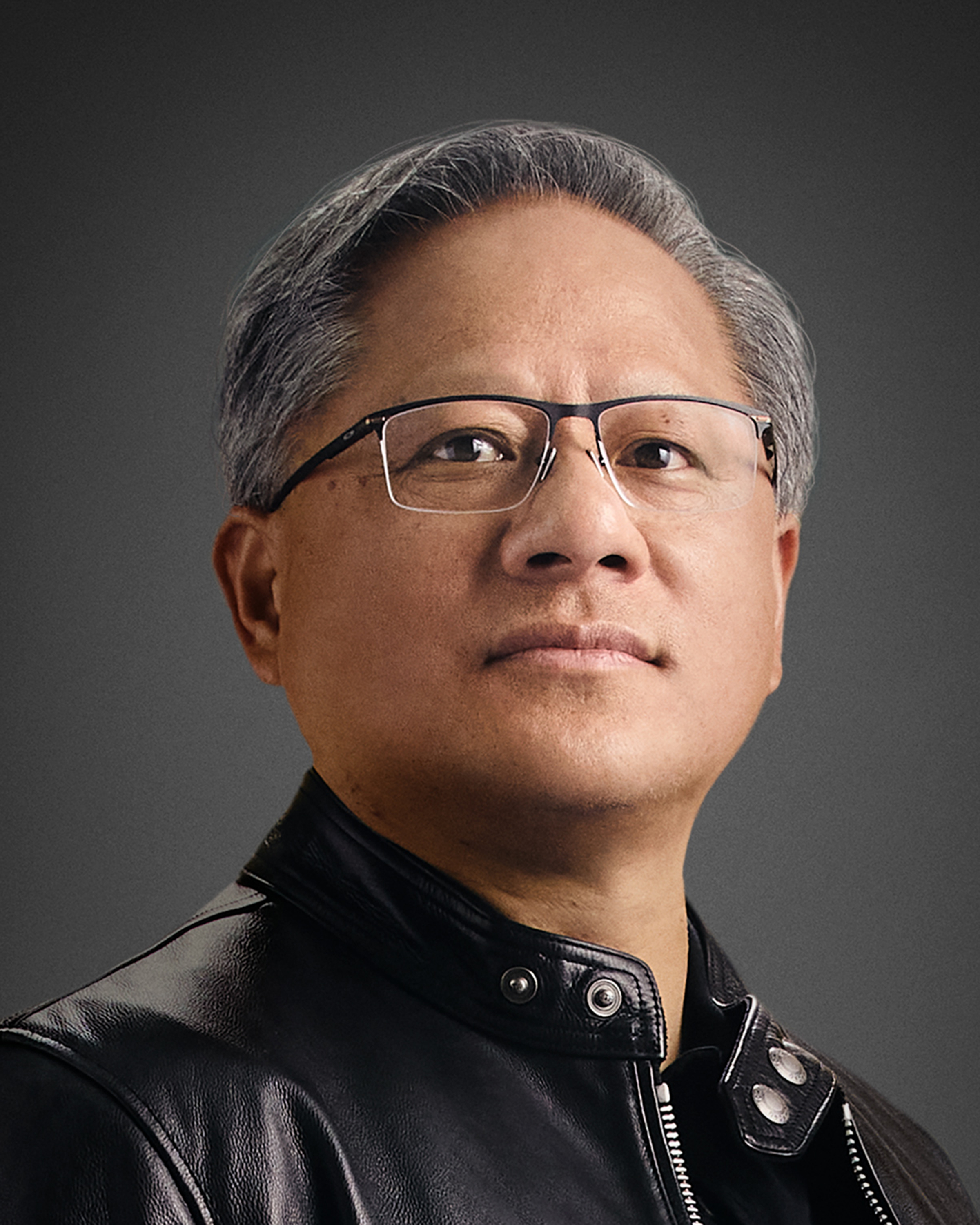
Nvidia's board unanimously reinstated Jensen Huang as CEO on Nov. 23, just 11 days after he resigned, sending shares up more than 30% in early trading.
Nvidia's board unanimously reinstated Jensen Huang as CEO on Nov. 23, just 11 days after he resigned, sending shares up more than 30% in early trading.
Nvidia's board of directors reinstated Jensen Huang as president and chief executive officer on Monday, November 23, effective immediately — just 11 days after he resigned — in a stunning reversal that sent the chipmaker's shares soaring more than 30% in early trading and reignited the global AI rally.
The board voted unanimously to bring Huang back as CEO, president and board member, Nvidia announced before the market opened. The company said the decision followed "a series of discussions and meetings" with Huang, after which directors were satisfied "with respect to Mr. Huang's candor and ability to lead NVIDIA."
The full timeline: 11 days from resignation to reinstatement
Huang resigned on November 12 after revelations of extramarital affairs, including one with a businesswoman whom U.S. authorities suspect of spying for China, an allegation Beijing denies. The resignation stunned Silicon Valley and Washington, because Huang is not only Nvidia's chief executive but its co-founder and, for more than three decades, the public face of the company that powers the artificial intelligence boom.
The board moved quickly to fill the gap. Colette Kress, Nvidia's chief financial officer, served as interim CEO and delivered the company's third-quarter earnings report in that role. She will remain chief financial officer now that Huang has returned.
Just five days after the resignation, the story took a political turn. On November 16, President Donald Trump told CNBC that Huang should be reinstated, calling him "a brilliant, brilliant person" and adding, "They should accept an apology." Trump also told CNBC that Huang had been "exonerated" and that the attorney general had confirmed there was no evidence that he had done anything unlawful.
The board did not follow that advice at first. Speaking on Nvidia's earnings call on November 17, board chair Harvey Jones said the board had "unanimously accepted" Huang's resignation and "does not intend to reinstate Jensen as CEO." That statement, made only six days before the reversal, is what makes Monday's decision so extraordinary: the same board, led by the same chair, voted unanimously to do the opposite.
On Monday, Jones said the board believes Huang's return is "in the best interests of our stockholders, employees, partners and customers." In its announcement, Nvidia said the board "received input from senior levels of the United States government, and based on that input, the Board is confident that Mr. Huang's reinstatement poses no national security risk."
Key quotes and reactions
President Donald Trump welcomed the move on Truth Social on Monday, calling it "the correct and proper decision to return Jensen Huang to the position of CEO." Trump also called Huang "a Great Patriot and National Treasure" and said he had discussed the matter with Chinese President Xi Jinping on Friday, telling reporters that Xi had "great respect" for Huang.
Huang himself told CNBC on Monday: "I can't wait to get back to work. I'm honored by the opportunity to lead NVIDIA again. AI is the new industrial revolution, and I am rejoining the company with the greatest humility."
Not everyone in Washington was celebrating. Senator Elizabeth Warren called the reinstatement "reckless and short-sighted" and said it raised "a serious concern for national security." Senator John Cornyn questioned the board's assurance, asking, "No national security risk? Based on what?" and adding, "The facts need to be laid out plainly and in full."
The reaction in the markets was the opposite of the reaction in parts of Congress. Nvidia shares, which had lost about a third of their value in the two weeks since Huang's resignation, leapt roughly 30% in early trading. Within the first hour, the Dow Jones Industrial Average was up 3% and the Nasdaq was up nearly 7%, according to the Los Angeles Times, while the S&P 500 rose about 4%, making up for Friday's plunge as investors had dumped AI-exposed shares, in part driven by the uncertainty at Nvidia itself.
Jacob Bourne, an analyst at eMarketer, told the Los Angeles Times: "There was no obvious successor who could even approximate his influence — and certainly not one who could match the trust he's built with the U.S. and Chinese governments." Bourne added, "It's a great reminder of the extent to which individual leadership drives these companies." Carl Tobias, a law professor at the University of Richmond, called the board's reversal "a 180-degree flip" and "an about-face."
Background and context
Huang co-founded Nvidia in 1993 and has led the company for more than three decades, building it from a maker of graphics chips for video games into the world's most valuable chipmaker and the central supplier of the processors that train and run artificial intelligence systems. That position puts Nvidia at the intersection of two forces that rarely collide so publicly: the AI race and the U.S.-China technology rivalry.
That rivalry is the backdrop to the scrutiny Huang faced. The U.S. Department of Justice has been investigating allegations that Nvidia violated U.S. export controls by selling AI chips to China, and on November 19 the California attorney general's office issued subpoenas to Nvidia as part of an investigation into whether it violated those controls, according to a person familiar with the matter cited by the Los Angeles Times. Nvidia has said it found no evidence of wrongdoing, and Trump said the attorney general confirmed there was no evidence Huang had done anything unlawful. Senator Ruben Gallego has also asked the Justice Department to investigate Huang's stock positions.
What happens next
Huang's return does not end the scrutiny. House Foreign Affairs Committee Chairman Representative Brian Mast said Huang had agreed to testify on December 1 before three Republican-led committees, in a closed-door session. Mast said: "The board's decision to reinstate Jensen Huang as CEO is deeply concerning and underscores the need for a thorough congressional investigation into NVIDIA's compliance with U.S. export controls."
For now, though, the board's message is unambiguous: after a week in which it said it would not bring Huang back, it has brought him back, unanimously, and with the explicit backing of the White House.
Why this matters for Hollywood
Nvidia sits at the center of the technology Hollywood now runs on. Its chips and software power the AI tools reshaping production — generative video, visual-effects rendering, virtual production stages and AI-assisted editing — and the studios, vendors and post houses building those pipelines plan years ahead around Nvidia's roadmap.
Two weeks of leadership chaos at the world's most valuable chipmaker rattled the AI trade that underwrites Hollywood's biggest technology bets. Huang's return steadies that roadmap, and the market's violent relief rally shows just how much of the entertainment industry's AI future is priced on Nvidia staying stable. It is also a governance lesson: the board that accepted its founder's resignation within days has now reversed itself within 11 days, with Washington weighing in along the way. For an industry betting its next decade on AI, who runs Nvidia is now a Hollywood story too.
More in Industry

Hollywood Is Losing the Fight to Keep Production in Los Angeles — And Now Washington Is Getting Involved
Skydance Is Merging Warner Bros. and Paramount TV Into One Studio — And Hollywood Is Bracing for What Comes Next